

CONDITION
Perimenopause: The Complete Evidence-Based Guide
"Perimenopause isn't the end of feeling like yourself. It's the beginning of understanding your body in a new way."
PERIMENOPAUS
01 - What exactly is Perimenopaus?
Perimenopause is the natural transition leading up to menopause. During this time, the ovaries gradually produce less estrogen and progesterone, causing hormonal fluctuations that can affect almost every system in the body. Although many people think menopause happens overnight, the reality is very different.
For most women, menopause is preceded by several years of hormonal changes known as perimenopause. This transition often begins gradually and develops over time, sometimes so slowly that the first symptoms are easy to dismiss. You may notice that your menstrual cycle becomes slightly shorter or longer than usual. Sleep might become less restful. You may feel unusually tired despite getting enough rest, become more emotional than before, or experience episodes of feeling unexpectedly warm.
Many women initially assume these changes are caused by stress, work, parenting, poor sleep or simply getting older. In reality, fluctuating hormones are often playing a major role.
Perimenopause is not a disease and it is not a medical condition that needs to be "cured." It is a normal biological stage that every woman experiences if she reaches natural menopause.
However, "normal" does not necessarily mean easy. For some women, symptoms are mild and barely noticeable. Others experience changes that significantly affect their quality of life, relationships, work performance and overall wellbeing.
Understanding why these symptoms occur allows women to make informed decisions about lifestyle, nutrition and, when appropriate, medical treatment.
PERIMENOPAUS
02 - When Does Perimenopause Start?
There is no exact age when perimenopause begins. For most women, noticeable hormonal changes start during their 40s. However, modern research shows that hormonal changes can begin earlier than many people realise.
Some women notice the first subtle signs from their mid-30s, although symptoms are often mild and easily overlooked.
Early changes may include:
- Slightly shorter menstrual cycles
- More noticeable premenstrual symptoms
- Poorer sleep
- Increased anxiety
- Longer recovery after stressful periods
- Reduced resilience to physical or emotional stress
These early symptoms do not necessarily mean menopause is approaching immediately. Instead, they often reflect the first gradual changes in ovarian function.
Factors That May Influence Timing
Genetics
Family history plays one of the biggest roles. Women whose mothers experienced early menopause are more likely to experience earlier hormonal changes themselves.
Smoking
Smoking is consistently associated with an earlier menopause. Research suggests smokers often reach menopause one to two years earlier than non-smokers.
Medical Treatments
Certain cancer treatments, pelvic surgery or removal of ovarian tissue may lead to earlier menopause.
Autoimmune Conditions
Some autoimmune diseases can affect ovarian function and influence the timing of menopause.
Lifestyle
Although healthy eating and regular exercise cannot prevent menopause, maintaining a healthy lifestyle may help support overall wellbeing throughout the transition.
PERIMENOPAUS
03 - Why Does Perimenopause Happen?
To understand perimenopause, it helps to understand how the ovaries work throughout a woman's life. Unlike men, who continuously produce new sperm, women are born with their lifetime supply of immature eggs.
At birth, the ovaries contain approximately one to two million follicles. By puberty, this number has naturally declined to around 300,000–500,000. Throughout the reproductive years, only a small proportion of these follicles ever mature enough to ovulate.
The rest gradually disappear through a natural biological process called atresia. As women approach their late 30s and 40s, the remaining follicles become fewer in number and less responsive to hormonal signals from the brain.
This is when the hormonal transition begins. Some women notice the first subtle signs from their mid-30s, although symptoms are often mild and easily overlooked.
Early changes may include:
- Slightly shorter menstrual cycles
- More noticeable premenstrual symptoms
- Poorer sleep
- Increased anxiety
- Longer recovery after stressful periods
- Reduced resilience to physical or emotional stress
These early symptoms do not necessarily mean menopause is approaching immediately. Instead, they often reflect the first gradual changes in ovarian function.

AGE 20 - 35
REGULAR CYCLES
Hormone levels remain relatively stable, and ovulation occurs regularly. Most women experience predictable menstrual cycles with few hormone-related symptoms during this stage.
AGE 35 - 45
PERIMENOPAUS
Hormone levels begin to fluctuate as estrogen and progesterone gradually decline. This transition can cause hot flashes, night sweats, poor sleep, mood changes and irregular periods, often lasting several years.
12 MONTHS WITHOUT A PERIOD
MENOPAUS
Menopause is officially reached after 12 consecutive months without a menstrual period. It marks the end of reproductive years and the transition into a new hormonal stage of life.
AGE 50+
POSTMENOPAUS
Hormone levels stabilise at a lower level after menopause. While hot flashes often improve over time, maintaining bone, heart and muscle health becomes increasingly important.
SYMPTOMS OF PERIMENOPAUS
Recognize. Understand. Take Control
Perimenopause can affect every part of your life. Explore most common symptoms and whats happening to your body.
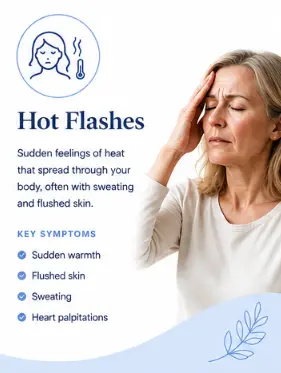
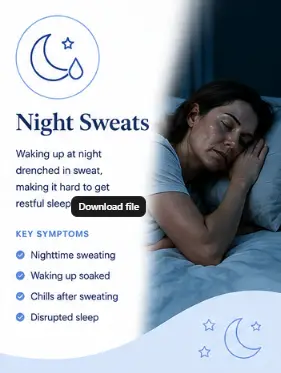
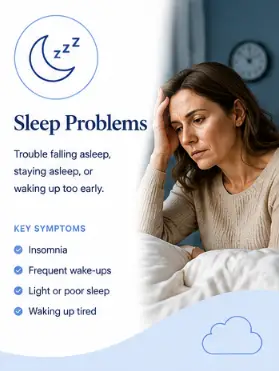
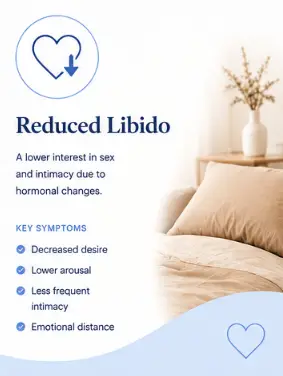
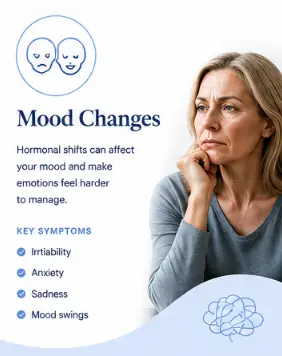
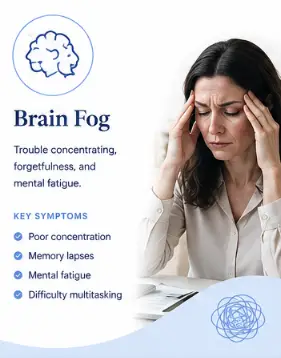
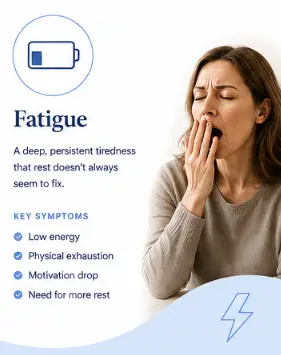
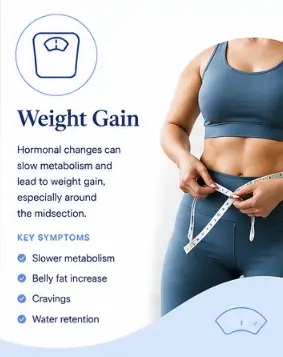
DIAGNOSE
04 - How is Perimenopause Diagnosed?
There is no single blood test that confirms perimenopause.
Doctors usually diagnose it based on:
- Age
- Menstrual history
- Symptoms
- Medical history
Hormone testing is often of limited value because estrogen and follicle-stimulating hormone (FSH) fluctuate substantially from day to day during perimenopause.
Blood tests may still be recommended to exclude other causes of similar symptoms, including:
- Thyroid disorders
- Iron deficiency
- Vitamin B12 deficiency
- Diabetes
- Pregnancy
- Certain medications
CONDITIONS
05 - Conditions That Can Mimic Perimenopause
Many symptoms overlap with other medical conditions.
Your healthcare provider may investigate:
- Hypothyroidism
- Hyperthyroidism
- Iron deficiency anemia
- Vitamin D deficiency
- Depression
- Anxiety disorders
- Sleep apnea
- Chronic stress
Treating these conditions appropriately is important because they can worsen menopausal symptoms or exist alongside perimenopause.
SYMPTOMS
06 - Can You Reduce Symptoms Naturally?
Yes—many women experience meaningful improvements through a combination of lifestyle changes and evidence-based nutritional support.
Research consistently suggests that symptom management works best when several areas are addressed together:
- A nutrient-rich diet
- Regular physical activity
- Good sleep habits
- Stress management
- Maintaining a healthy body weight
- Evidence-based supplements with clinical research
No single intervention eliminates every symptom, but combining these approaches often provides greater benefits than relying on one strategy alone.
KEY TAKEAWAYS
- Perimenopause is the hormonal transition before menopause.
- It usually begins between ages 40 and 45 but can start earlier.
- Symptoms result primarily from fluctuating estrogen and declining progesterone—not simply "low estrogen."
- Common symptoms include hot flashes, night sweats, poor sleep, anxiety, brain fog, fatigue and irregular periods.
- Diagnosis is based mainly on symptoms and menstrual history rather than hormone blood tests.
- Lifestyle changes and clinically studied supplements may help improve quality of life during this transition.

Nutrition During Perimenopaus
Hormonal changes increase your body’s nutritional needs. At the same time, metabolism naturally slows, muscle mass gradually declines, and maintaining bone health becomes increasingly important.
A balanced, nutrient-rich diet helps support hormone regulation, sustained energy, healthy bones, muscle function and overall wellbeing during perimenopause.
TRY TO INCLUDE
- Lean protein with every meal
- Plenty of colourful vegetables
- Fruits rich in antioxidants
- Whole grains
- Healthy fats from olive oil, nuts and oily fish
- Calcium-rich foods
- Vitamin D sources
TRY TO LIMIT
- Highly processed foods
- Excess sugar
- Excess alcohol
- Frequent ultra-processed snacks
SYMPTOMS OF PERIMENOPAUS
Evidence-Based Supplements
Clinical research has shown that several evidence-based ingredients can help support women during perimenopause by reducing some of the most common symptoms, including hot flashes, night sweats, mood changes and poor sleep.
At LUMIR, we carefully select ingredients supported by human clinical studies—because the quality of the evidence matters far more than simply including a long list of ingredients.
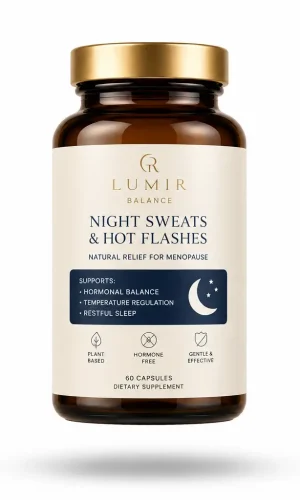
LUMIR BALANCE
Daily hormonal support hot flashes, night sweats and overall hormonal support
- ERr 731® (Rhapontic Rhubarb Extract)
- Affron® Saffron Extract
- Vitamin D3
- Vitamin K2 (MK-7)
- Vitamin B6 (P-5-P)
- Vitamin B12 (Methylcobalamin)
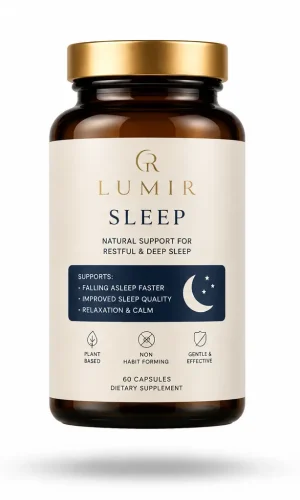
LUMIR SLEEP
Deep restorative sleep for women experiencing hormonal changes.
- Magnesium Bisglycinate
- Glycine
- L-Theanine
- Melathonin
- Vitamin D3
- Vitamin K2
Questions
How long does perimenopause last?
Most women experience perimenopause for 4–8 years, although some transition more quickly and others take longer.
Can I become pregnant during perimenopause?
Yes. Pregnancy remains possible until menopause has been confirmed after 12 consecutive months without a menstrual period.
Does every woman experience hot flashes?
No. Around 70–80% of women experience vasomotor symptoms, while others may mainly notice sleep changes, mood changes or irregular periods.
Are supplements a replacement for hormone replacement therapy (HRT)?
No. Supplements and HRT are different approaches. Some women choose HRT under medical supervision, while others prefer evidence-based non-hormonal options. The most appropriate choice depends on individual circumstances and should be discussed with a healthcare professional.
When should I speak with my doctor?
You should seek medical advice if symptoms significantly affect your quality of life, if bleeding becomes unusually heavy, or if you experience bleeding after menopause.
How long should I take supplements?
Most clinical studies evaluate benefits after 8–12 weeks of consistent daily use. Improvements often become more noticeable with continued use, although individual responses vary.
A ROUND OF APPLAUS
Scientific References
- The North American Menopause Society (NAMS). The 2023 Nonhormone Therapy Position Statement.
- The North American Menopause Society. Menopause Practice: A Clinician’s Guide.
- American College of Obstetricians and Gynecologists (ACOG). Management of Menopausal Symptoms.
- Santoro N, et al. Endocrine Reviews. Physiology of the menopausal transition.
- Avis NE, et al. SWAN Study (Study of Women’s Health Across the Nation).
- Portman DJ, Gass MLS. Genitourinary Syndrome of Menopause.
- Kaszkin-Bettag M, et al. Clinical evaluation of ERr 731® for menopausal symptoms.
- Heger M, et al. Randomized controlled trials of ERr 731® in menopausal women.
- Lopresti AL, et al. Clinical studies evaluating Affron® saffron extract for mood and sleep.
- Kell G, et al. Saffron and emotional wellbeing: systematic review.
- Abbasi B, et al. Magnesium supplementation and sleep quality.
- Boyle NB, et al. L-theanine and stress reduction.
- Yamadera W, et al. Glycine improves subjective sleep quality.
- Bannai M, et al. Glycine ingestion before bedtime improves sleep and daytime performance.
- EFSA Scientific Opinions on Vitamin D, Vitamin K, Vitamin B6 and Vitamin B12 health claims.
This guide is intended for educational purposes only and should not replace personalized medical advice. Always consult a qualified healthcare professional before starting new supplements or making significant changes to your healthcare routine.